


Al-Andalus and September 11th
Al-Andalus, Al Qaeda, and the historic symbolism of September 11th
It has been 12 years today since the horrendous events of September 11th, 2001. By striking at the heart of one of the greatest cities of modern Western civilization, Osama Bin Laden and his Al Qaeda affiliates sought not just short-term death and destruction, but also, in their beliefs, a historic revenge.
In the ideology of global jihad (holy war), acts of terror today are merely battles in a continuous war between Christianity and Islam, spanning 14 centuries. Therefore, the historic symbolism of such acts is also important. The September 11 date carries a crucial historic significance through two key occasions that defined modern Western civilization.
392 years before the attacks in 2001, two entirely unrelated events on the same day, spanning both sides of the Atlantic, were to change the course of history. This happened in two countries today known as Spain, and the United States of America.
What we today know as Spain was always a melting pot of various cultures, with Phoenicians, Greeks, Romans, Carthagenians, Visigoths, Moors, and others leaving their footprints on the Iberian peninsula throughout the centuries.
Eight Centuries of Al-Andalus
Between 711 and 1492 AD, successive dynasties of Muslim Moorish rule left a legacy that includes several of Spain’s World Heritage sites and main tourist attractions, such as the Alhambra, Córdoba and the Medina Azahara.
781 years is a long time in the history of any place on Earth. Until recently, though, the Islamic era of Al Andalus (the Arabic name for the Iberian peninsula) was scantily mentioned in most history books. When referred to, it was generally limited to la Reconquista – the conquest of Moorish territories by the then newly formed Catholic Spanish kingdom – formed through the union between the kingdoms of Castilla and Aragon.
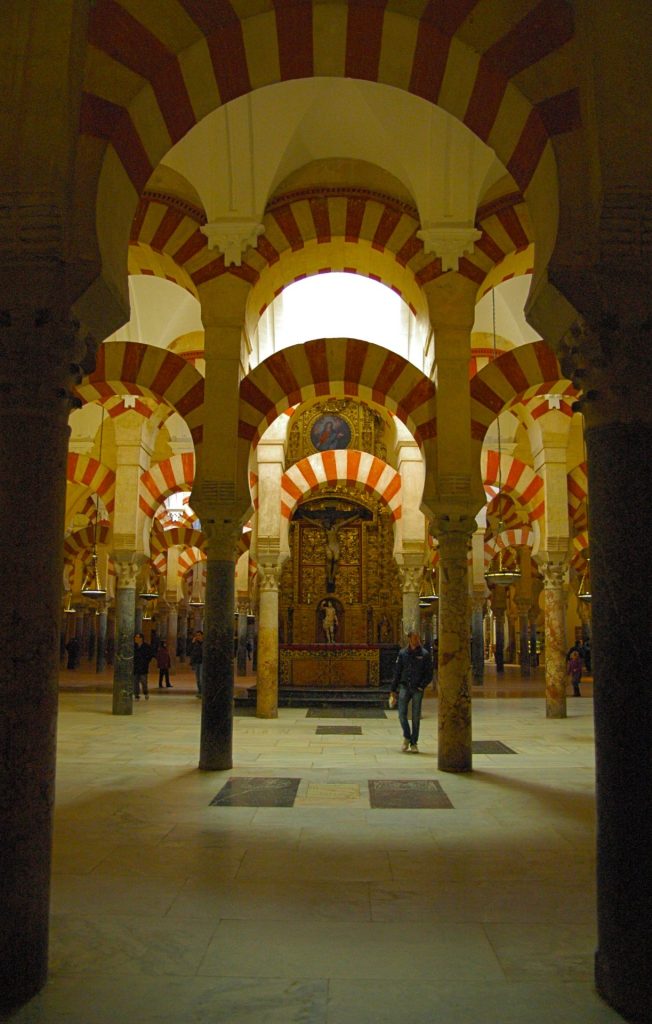
Córdoba, today a small Spanish city of 330,000 inhabitants, is believed to have been the world’s most populous in the 10th century. Under Islamic rule, Córdoba turned into a global centre of arts, science and technology, famed for its multi-cultural identity, with Christians, Muslims and Jews living, working and prospering together. It was a beacon of civilization, far more advanced than any other part of Europe at the time.
Granada, home to the legendary Moorish citadel Alhambra, is today a major tourist attraction in Spain. The Emirate of Granada was the last Moorish kingdom and one of the final outposts of Islam in Southern Europe. Its fall in 1492, marked not only the rise of Spain as a Catholic kingdom after 800 years of Islamic rule, but also the end of the vibrant multi-cultural pluralism of Al-Andalus.
Expulsion of the Moriscos in 1609
Throughout the 16th century, the oppression against Muslims and Jews grew increasingly harsh under the new Catholic monarchy. It all culminated on September 11th, 1609, when a royal decree was announced across Spain, ordering the expulsion of all Moriscos (former Muslims converted by force to Christianity, but suspected of candidly practicing their old religion).

Over a period of 4 years, a grand project of ethnic cleansing on a scale not to be seen again in Europe until World War 2, saw more hundreds of thousands of people dispossessed and evicted from the country that they had called home for 40+ generation. The impact on the Spanish society was massive: The country as a whole possibly lost as much as 1/8 of its population, and some regions up to 30%. Almost forgotten in Europe today, this was one the major atrocities in the history of mankind.
The loss of a great number of skilled workers and most of their administrative elite also affected the Spanish economy for centuries after.
September 11th and the Symbolism of a Date
The date may ring a bell, though: September 11th, 1609.
While Al-Andalus may have been largely left out from the history books of the Western world, the history of the reconquest of the Iberian peninsula is key to some of the most extreme ideologists of Al Qaeda and global jihad. If September 11th 1609 was the starting point of one of the biggest campaigns of ethnic cleansing in history, instigated against Muslims by the new Catholic kingdom on the Iberian peninsula, then that event is probably what Osama Bin Laden, Ayman Al Zawahiri and Khalid Sheikh Mohammed had in mind when choosing September 11th as the date for the gargantuan attacks against another target in the Western world: New York.
Same Day, Different Continent: Henry Hudson and the Manhattan Island
Coincidentally, September 11th 1609 was also the date when Henry HudsonHenry Hudson sailed into what is now New York Bay, claimed the region, and paved the way for the first permanent European settlement on Manhattan, the island at the heart of the city now known as New York.
The 46-year old explorer obviously has no idea of the ethnic cleaning campaign launched on the same day on the other side of the Atlantic, just like King Philip III of Spain was oblivious that an English explorer had discovered a site that centuries later would become a beacon of the modern world.
September 11th 1609 was in many ways a turning point in the relationship between Christianity and Islam. It marked the final extinction of what used to be a gem in the Islamic world. It also was the starting point for the beacon of Western civilization that became New York.
In the ideology of global jihad, the Western world is a monolithic alliance of crusaders, bent on destroying Islam, in the same way as many islamophobes view the entire Muslim world as conspiring to destroy the West. From that perspective, the two events of September 11th 1609 give the date an important symbolic value, both as the beginning of a grand but largely forgotten atrocity, and as the starting point for one of the most admired cities in the Western world.
The double historical importance of the date logically links the choice of a date to the choice of a place: The date of September 11th connects the city that in many ways symbolizes modern Western civilization, with an event for which the avengement is a cornerstone of Al Qaeda’s ideology.
By choosing September 11th as a date, and New York as a location, Osama Bin Laden and his fellow Al Qaeda commanders may have seen a dual symbolism that would signal a new turning of the tables.
While the two events September 11th 1609 were entirely unconnected, their double symbolic value 392 years later, may nevertheless have motivated the most horrendous events in New York’s history.