

Africa Has a Tourism Marketing Problem. Its Beaches Prove It.
Tripadvisor’s latest Travellers’ Choice beach rankings tell a familiar story: 24 beaches, one in Africa.
South Africa, of course.
No dig at South Africa. Boulders Beach is extraordinary, and South Africa has done a better job than most African destinations at turning natural beauty into global travel recognition. But when only one African beach makes a global list like this, the issue is not coastline quality, but visibility. Marketing.
Anyone who has spent real time on Africa’s shores knows the continent has some of the world’s finest beaches.
Diani has the silky, white, powdery sand travel magazines love when it belongs to the Maldives, Thailand, Mexico, or the Caribbean. The same quality runs along much of Kenya’s coast, from Mombasa and Watamu to Malindi, Kilifi, Tiwi, and Msambweni. This is not second-tier coastline. It is global elite.
Diani has repeatedly been recognised as one of Africa’s leading beach destinations, including wins at the World Travel Awards in 2023 and 2024. Zanzibar won the same African category in 2025, with nominees including Diani, Bazaruto, Nungwi, Cape Town, Plettenberg Bay, Cape Maclear, and Sharm El Sheikh. Africa is not short of world-class beaches. It is short of world-class positioning.
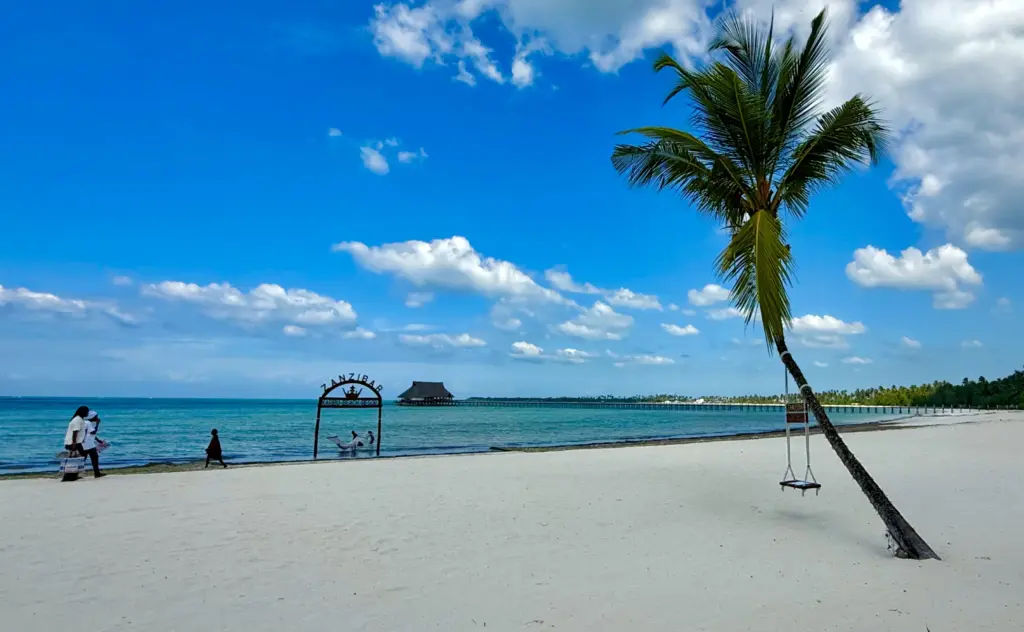
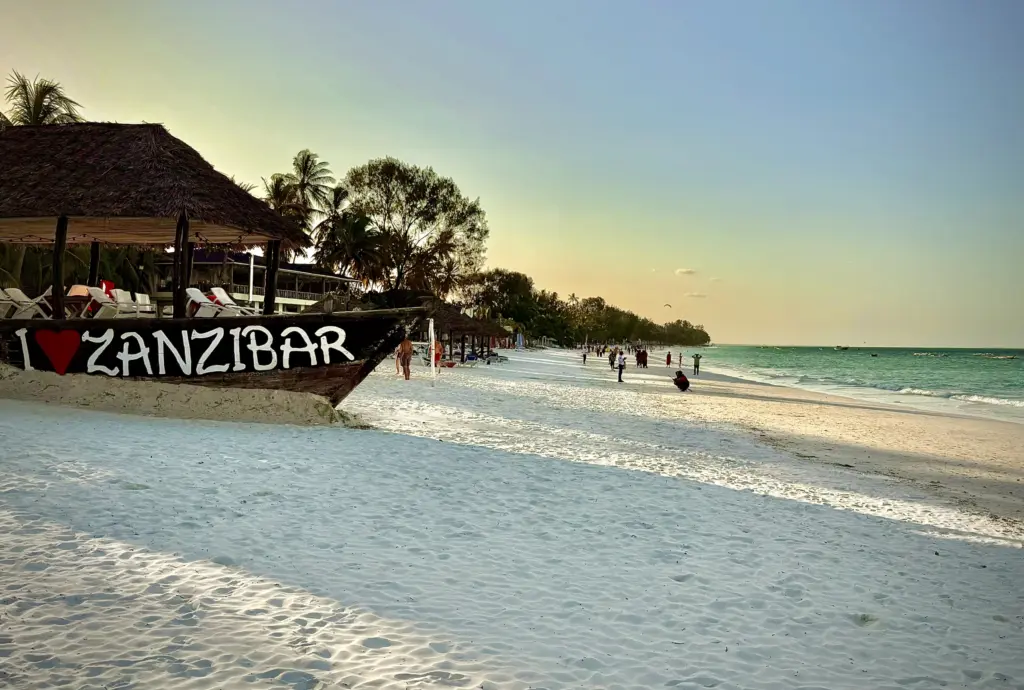
Then there is Zanzibar, already a byword for incredible beaches: Nungwi, Kendwa, Paje, Matemwe, Jambiani, Kizimkazi, Kiwengwa. Some are famous. Others not yet.
And the map keeps going: Kilwa, Mafia Island, Pangani, Mozambique, Bazaruto, the Quirimbas, Tofo, Vilanculos, Ilha de Moçambique, Sierra Leone, São Tomé and Príncipe, Madagascar, Senegal, the Comoros, North Africa, the Red Sea, and the Indian Ocean island states.
So why does so little of this show up in global rankings?
Not for lack of beaches, but because the world doesn’t know them well enough.
The Product Is There. The Marketing Isn’t.
Africa is still too often reduced to a narrow tourism story: safari, Cape Town, pyramids, gorilla trekking, maybe Zanzibar, maybe Morocco, maybe the Victoria Falls.
All spectacular. All only fragments.
Africa also has historic island towns, cultural heritage, coral reefs, desert coastlines, mangroves, dhow routes, seafood cultures, ancient trading ports, spice islands, fishing villages, marine parks, and an Indian Ocean history linking the continent to Arabia, India, Persia, and Southeast Asia.
The world’s biggest tourism destinations don’t become global magnets simply because they are beautiful. They market themselves with discipline, money, repetition, creativity, and scale.
Spain doesn’t attract nearly 100 million visitors a year because people discovered it by accident. France, Thailand, Greece, Italy, the United States, Turkey, Portugal, Mexico, and the UAE don’t sit pretty and wait politely for travellers to notice them. They advertise, court influencers, host journalists, dominate travel fairs, and build destination brands around simple emotional triggers: sun, food, romance, freedom, culture, nightlife, family holidays, luxury, adventure, escape.
Africa has all of this, often in stronger, rawer, more memorable forms. But too often, African countries whisper while competing destinations shout.
Numbers are improving. Glaring gaps remain
The good news is that Africa’s international arrivals are growing.
According to UN Tourism, Africa welcomed around 81 million international visitors in 2025, an 8% increase from 2024, making it the world’s fastest-growing tourism region. Globally, international tourist arrivals reached an estimated 1.52 billion.
That is progress. But it also shows the size of the missed opportunity.
Africa received 81 million visitors in 2025. Spain alone received 96.8 million.
Spain is an extraordinary destination. I love it and rarely miss an opportunity to visit. But Africa is roughly three times the size of Europe, and Spain would fit into Africa around 60 times. Yet one European country received more international visitors than the whole African continent.
That should make every tourism minister, tourism board, airline executive, hotel group, investor, destination marketer, and private-sector operator on the continent think.
This is not just about beaches. It’s about market share.
And no, it’s not because Africa’s beaches can’t compete with Spain’s. In my humble opinion, the best beaches in Africa are far better. Much better. You don’t have to agree.
The difference is not beauty. The difference is marketing power.
Global Tourism Rewards Those Who Show Up
Go to WTM London, ITB Berlin, or FITUR. The world’s big tourism markets don’t just attend. They arrive with scale: massive stands, polished campaigns, destination films, airline partnerships, hosted buyers, celebrity ambassadors, journalist meetings, influencer trips, trade activations, food, music, culture, data, and follow-up.
Africa has strong exceptions. South Africa usually shows up well. So do Morocco, Tunisia, and Egypt. But that also proves the imbalance: four countries alone capture around half of all international tourism to Africa. Kenya, Tanzania, and Rwanda at least make an effort, if still too cautiously. As a continent, Africa still fades next to the big global destinations. At some fairs, the entire Africa section can feel barely larger than one major stand from Europe, Asia, or the Middle East.
The big destinations understand visibility. Marketing fills planes, attracts investors, and turns better hotels, attractions, and infrastructure into bankable opportunities. Over time, that is how destinations become obvious to the world.
Rankings Follow Attention
Travel rankings are useful, but they are not neutral.
Tripadvisor’s Travellers’ Choice Awards are based on millions of reviews, ratings, and traveller opinions. That gives them value, but it also gives heavily visited destinations an advantage. More travellers mean more reviews. More reviews mean more visibility. More visibility means more travellers.
If African destinations are under-visited relative to their quality, they will also be underrepresented in user-generated rankings.
The same applies to guidebooks, media lists, influencer roundups, “best of” features, and glossy travel books. Lonely Planet’s 2024 book, Best Beaches: 100 of the World’s Most Incredible Beaches, included only five African beach destinations according to published summaries: Camps Bay, Mnemba Island, Le Morne, Nosy Iranja, and Anse Source d’Argent.
All worthy inclusions. But five out of 100?
For a continent with Africa’s coastline, islands, archipelagos, coral reefs, surf beaches, tropical islands, desert shores, and historic coastal towns, that is not a product-quality problem. It is an attention problem.
And attention follows budgets, networks, relationships, repetition, and access.
Africa Needs Better Storytelling
Tourism is not sold by statistics alone. People travel because something catches them emotionally.
A beach is not just sand and water. It is walking barefoot after a long flight, grilled fish near the shore, turquoise water through palm trees, boats moving in the wind, fishermen pulling in the morning catch, children chasing crabs at low tide, and the ridiculous happiness of finding a cold drink after too much sun.
That is where influencers, journalists, filmmakers, photographers, travel writers, YouTubers, and serious content creators matter.
Tourism boards across the world know this. They host them, brief them, fund them, and build relationships with them because modern travel demand is shaped by first-person perspective, not press releases, generic slogans, or drone footage alone.
A good creator makes a place feel reachable. A good journalist can shift perception. A good filmmaker can compress a destination into 90 seconds of desire.
African tourism boards do this too. But not at the scale required.
Africa needs fewer ribbon-cutting photo ops and more creators who can make destinations searchable, shareable, and desirable.
Africa Has Star Power. Use It.
One of the best destination ads in recent years was the South African Tourism campaign featuring Trevor Noah.
It worked because it was funny, polished, globally understandable, proudly local, and emotionally effective. It did not reduce South Africa to scenery. It used personality, humour, confidence, and cultural fluency.
That is the kind of thinking Africa needs more of. Not imitation. Ambition.
Kenya has Lupita Nyong’o, Larry Madowo, Eliud Kipchoge, and a long list of cultural, sporting, media, and entrepreneurial names. Even Barack Obama is of Kenyan descent. Sierra Leone has Idris Elba. Senegal has Akon. Nigeria has music, film, fashion, food, and diaspora influence. Ghana has built momentum through heritage tourism. Rwanda has shown how strategy, events, sport, and premium tourism can shift perception. Morocco is investing heavily in infrastructure and global visibility ahead of the 2030 FIFA World Cup.
The fame is there. The stories are there. The landscapes are there. The missing piece is coordination and ambition.
Think Regionally, Not Only Nationally
Tourism is usually marketed nationally. Kenya markets Kenya. Tanzania markets Tanzania. South Africa markets South Africa. Rwanda markets Rwanda. Morocco markets Morocco. Seychelles markets Seychelles.
Tourism boards are national institutions with national budgets. But travellers often think regionally: East Africa, Southern Africa, the Indian Ocean, the Swahili Coast, the Sahara, West Africa, the Nile, the Red Sea, the Great Lakes, the Cape.
Africa needs stronger regional tourism brands. Not to replace national brands, but to lift them.
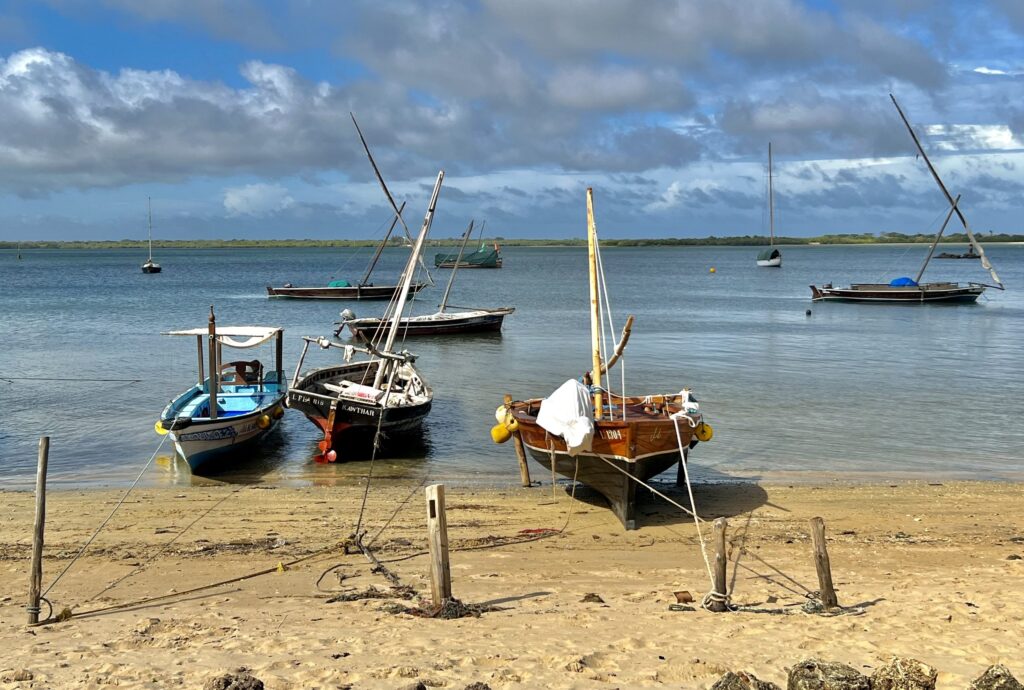
The Swahili Coast alone could be one of the world’s great travel brands: Lamu, Mombasa, Diani, Tanga, Zanzibar, Bagamoyo, Kilwa, Mafia Island, Mozambique Island, the Quirimbas, the Comoros.
That is not just beach tourism. It is history, food, architecture, sailing, culture, language, trade, music, and the Indian Ocean world.
Marketed properly, it could stand beside the Mediterranean, the Caribbean, the Riviera, the Aegean, and Southeast Asia as a recognised travel region. Today, too much of that story is fragmented.
Africa does not need one generic continental campaign that says everything and therefore says nothing. It needs sharper regional brands with clear identities, strong visuals, and serious private-sector participation.
The Private Sector Can’t Wait for Government
Tourism boards matter, but the private sector cannot stand around waiting. Hotels, airlines, tour operators, restaurants, booking platforms, creators, and investors all benefit when a destination becomes better known. They should help build that demand.
That means co-funding destination content, supporting serious creators, building regional itineraries, improving booking infrastructure, and pushing for the basics that turn interest into arrivals: air access, visas, signage, visitor information, and clean, easy arrival experiences.
Bring in the Internet-Native Generation
The market has moved. Travel inspiration now happens on Instagram, TikTok, YouTube, Google, Reddit, newsletters, WhatsApp groups, creator communities, and algorithm-driven feeds.
A 25-year-old traveller isn’t waiting for a brochure. They are searching, watching, saving, sharing, comparing, scrolling, and booking.
Africa needs more internet-native builders at the centre of tourism marketing. Not decorative youth panels. Actual campaign leaders, content producers, data analysts, distribution people, and product designers.
Use them properly.
Africa Needs Competitive Marketing
Africa does not need to be marketed as an exception. It needs to be marketed as a serious global competitor.
That means sharper positioning, stronger visuals, better campaigns, regional brands, creator partnerships, diaspora influence, airline partnerships, digital distribution, and private-sector coordination.
The job isn’t to beg for attention, but to compete for it.
Africa’s tourism growth is real, but growth from a low base isn’t enough. The continent should not be satisfied with being the fastest-growing tourism region. It should aim to become one of the most desired.
That will not happen by accident. Africa needs to get the message out. Louder, smarter, better, and together.