


Africa’s hotel investment boom is real, but uneven
Hotel development in Africa has reached record levels, with the continent’s branded hotel pipeline now at an all-time high.
W Hospitality Group puts the continent’s hotel chain development pipeline at 123,846 rooms across 675 hotels and resorts, up 18.6% from 2025. On a same-store basis, excluding new contributors to the survey, the pipeline is up 12.2%.
The demand side supports the investment case. UN Tourism says Africa welcomed 81 million international visitors in 2025, up 8% year-on-year. WTTC estimates travel and tourism contributed USD 228 billion to Africa’s economy in 2025, about 7% of regional GDP.
While the pipeline is strong, the distribution is far from even.
| Rank | Country | Hotels in pipeline 2026 | Rooms in pipeline 2026 | Growth in hotels vs 2025 | Growth in rooms vs 2025 |
|---|---|---|---|---|---|
| 1 | Egypt | 185 | 45,984 | +29.4% | +35.5% |
| 2 | Morocco | 75 | 10,606 | +29.3% | +23.6% |
| 3 | Nigeria | 57 | 8,480 | +18.8% | +15.8% |
| 4 | Kenya | 35 | 6,190 | +34.6% | +42.5% |
| 5 | Ethiopia | 34 | 5,964 | +3.0% | +5.6% |
| 6 | Cape Verde | 17 | 4,328 | +6.3% | -22.2% |
| 7 | Tunisia | 15 | 4,189 | -11.8% | -3.4% |
| 8 | Tanzania | 29 | 4,159 | 0.0% | +21.2% |
| 9 | South Africa | 31 | 4,136 | +10.7% | +1.5% |
| 10 | Ghana | 26 | 3,942 | +18.2% | +26.1% |
Egypt dominates the pipeline
Egypt is far ahead of every other African market. It has 45,984 rooms across 185 projects, more than one-third of the continent’s total pipeline. Morocco follows with 10,606 rooms.
Together, Egypt and Morocco account for more than 45% of all pipeline rooms in Africa.
The reasons are straightforward. Egypt has long been established as a major global tourism destination, with a mature tourism sector at scale, major resort markets, urban demand, air connectivity, and a long-standing base of international hotel brands.
Morocco has followed a different, but equally deliberate path: consistent tourism policy, strong infrastructure, clear destination marketing, and a defined investment agenda. Reuters reported that Morocco received a record 19.8 million tourists in 2025, up 14% year-on-year, with a target of 26 million by 2030.
Egypt and Morocco are the undisputed tourism leaders in Africa. Both are politically stable, with predictable policy environments and modern infrastructure. It is hardly surprising that investors favour these markets.
East Africa is moving from pipeline to construction

While North Africa has the largest pipeline, East Africa has some of the strongest construction momentum: Kenya has 6,190 rooms in the pipeline, Ethiopia 5,964, and Tanzania 4,159. In all three markets, close to 80% of pipeline rooms are already under construction.
That signals real momentum. Signings show appetite. Construction means capital has been mobilised and early execution hurdles have been cleared.
This is particularly visible in Kenya. The country recorded 17 new hotel deals in 2025, the highest number outside Egypt and Morocco. Nairobi also holds a strong and growing position as a continental hub for business, diplomacy, aviation, and meetings, incentives, conferences and exhibitions (MICE).
The calibre of brands entering the market also says something. JW Marriott’s opening in Westlands brought one of Marriott’s top luxury brands into Nairobi, with a 35-storey hotel and branded residences. Developments such as Silva Gigiri point in the same direction. Appetite for upscale, luxury, and hospitality-led real estate in Nairobi remains strong. Leisure demand is also growing, from 1.06 million visitors in 2024 to 1.24 million in 2025. For investors, this strengthens the Kenya case. A tourism industry supported by leisure, business, MICE, aviation, and diplomacy is far more resilient than one dependent on a single segment.
Growth is concentrated
The top ten countries account for 79% of all pipeline rooms and more than 75% of new signings. As in the broader tourism sector, hotel investment in Africa remains concentrated in a small group of markets with stronger destination brands, deeper demand, better infrastructure, and more accessible financing.
For much of the rest of the continent, the picture is more difficult. Nigeria and Ghana illustrate the challenge. Both have strong urban and corporate demand potential, but conversion remains slow. Project delays, financing constraints, foreign exchange pressure, and execution risk continue to hold back delivery.
For now, the leaders are pulling further ahead. The rest of the continent has potential, but lacks the conditions to turn interest into completed hotels.
Global brands lead the branded-hotel market
The brand landscape is also concentrated, although not without reason. Marriott, Hilton, Accor, IHG, and Radisson are among the major global hotel platforms, with large distribution systems, loyalty programmes, owner networks, and lender recognition.
Marriott leads Africa’s pipeline with 31,782 rooms, followed by Hilton with 19,599 and Accor with 18,298. Together with IHG and Radisson, the five largest global hotel groups account for about 80% of all pipeline hotels and rooms in Africa.
That reflects a growing international interest in Africa’s hospitality sector, but also the continent’s reliance on a narrow group of international brands. For developers and lenders, these franchises reduce perceived risk. For the market, it shows how much room remains for regional brands, independent operators, and locally rooted hospitality concepts to grow.
Ownership is the other side of the equation. In most cases, brands do not own the real estate. The execution risk sits with the developer or investor. The right brand can help. It can improve positioning, distribution, lender confidence, and market credibility. But it does not guarantee success. The project still needs the right location, disciplined execution, strong operations, and a clear market position.
The main constraint is delivery
Africa’s hotel sector does not lack ambition. It lacks consistent delivery. HVS describes the continent’s challenge as a delivery problem more than a development problem. Many projects are announced. Fewer open on time. Some never open.
The blockers are familiar: weak pre-development work, misaligned budgets, inadequate committed funding, foreign exchange volatility, permitting delays, and limited hospitality-specific project management.
W Hospitality’s data points in the same direction. More than 65,000 rooms are expected to open in 2026 and 2027, but 20% of those rooms are still not under construction. The 2024 actualisation rate was only 38%, up from 21% in 2023, but still far below the 75% achieved in 2019. Pipeline numbers therefore need to be read carefully. They indicate appetite, brand confidence, and owner ambition. They do not guarantee committed capital, construction progress, or eventual delivery.
Currency risk shapes investor appetite
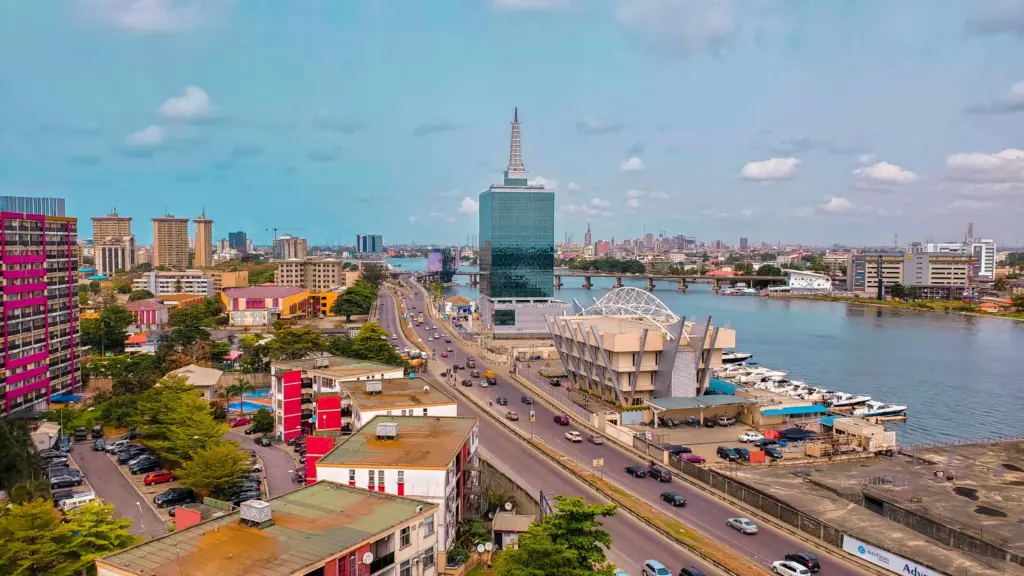
Currency convertibility and repatriation risk also shape investor appetite.
Markets such as Kenya, where foreign investors can generally convert and repatriate capital and profits without major restrictions, are naturally easier for international capital to underwrite. Investors still need to manage currency movement, but at least the exit and cashflow mechanics are clearer.
In more restrictive markets, including Angola and Ethiopia, the investment case becomes more complicated. Demand may be real, and the pipeline may look promising, but international investors need confidence that dividends, management fees, debt service, and eventual sale proceeds can actually be converted and repatriated.
Where that confidence is weak, projects become more dependent on local capital, strategic investors, or highly structured deals with hard-currency protections. That also affects completion. A pipeline backed mainly by local capital may still move, but it is often more exposed to liquidity constraints, import costs, and macroeconomic shocks.
The real investment test: from pipeline to performance
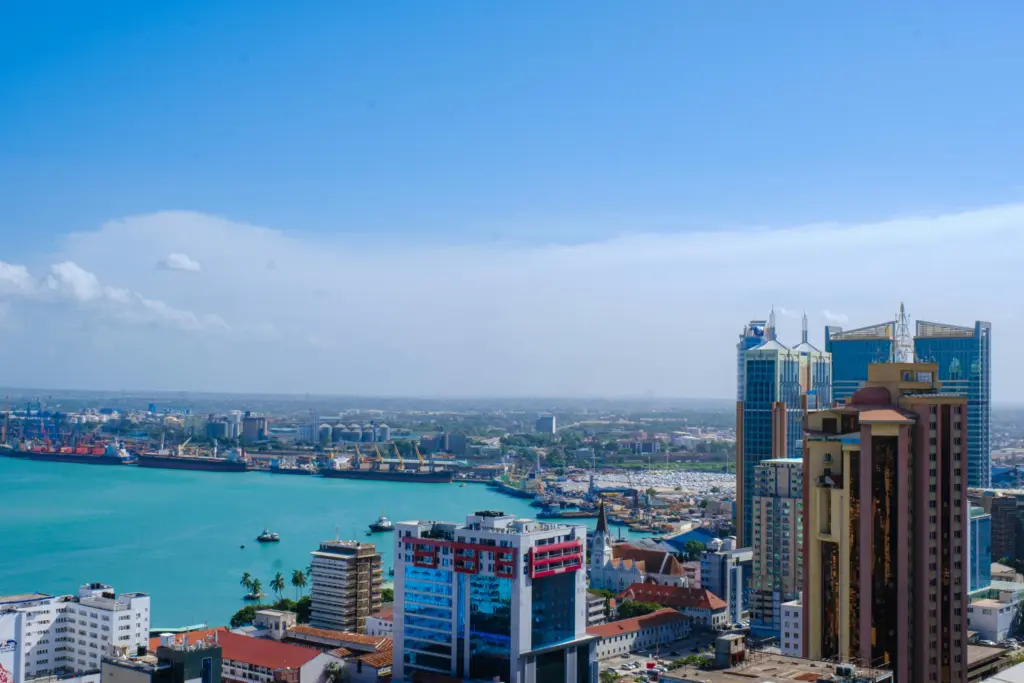
Africa needs more hotel rooms, but the opportunity differs widely from market to market. Some cities need international branded hotels. Others need mid-market products, serviced apartments, or repositioned resorts. In several destinations, the stronger investment case may be upgrading and professionalising existing assets rather than adding new keys. Many good assets underperform because of mediocre management. In those cases, international-level operational leadership, often through a strong third-party operator, can make a major difference.
The best opportunities will be in markets where demand is visible, financing is realistic, development teams are capable, and delivery risk can be managed. Egypt and Morocco are the established anchors. Kenya, Ethiopia, and Tanzania are current risers. Ghana, Uganda, Angola, and parts of West and East Africa could move further if financing and execution improve.
Africa’s hotel investment boom is gaining momentum, but it is still at an early stage. Tomorrow’s winners will be the markets that turn promising pipelines into high-performing, professionally operated hotels with strong reputations and high occupancy. Those hotels will set the examples investors look for. They will create confidence, prove the market, and help define the next phase of Africa’s hotel investment boom.