

Africa’s tourism boom is real. Now it needs open borders and open skies
Africa’s tourism boom is real.
In 2025, the continent was the world’s fastest-growing tourism region, with arrivals up about 8% to roughly 81 million visitors. This is no longer just recovery. It is growth.
The demand is there. But African destinations are still making it too hard to capture.
The continent has the product: wildlife, beaches, cities, heritage, food, music, culture, business hubs, conferences, diaspora travel, adventure, religion, landscapes, and world-class travel experiences.
But access remains expensive and cumbersome. Flights are costly. Regional air connectivity is weak. Visa policies add friction. Multi-country travel is harder than it should be.
Marketing creates interest. Access turns it into bookings.
The Big Four still carry the volume
Most of Africa’s tourism volume still sits with four countries: Morocco, Tunisia, Egypt, and South Africa.
Morocco received 19.8 million tourists in 2025. Tunisia passed 11 million. Egypt reached around 19 million. South Africa welcomed 10.5 million.
Together, these four destinations account for close to three quarters of Africa’s international tourist arrivals.
Africa may be the world’s fastest-growing tourism region, but most of its arrivals still go to the Big Four. The other 50 countries split the rest, unevenly.
East Africa – rising in different ways

Kenya remains one of Africa’s most versatile tourism economies, with safari, coast, business travel, MICE, conservation, culture, sports, and Nairobi’s hub position. International arrivals rose from about 2.47 million in 2024 to 2.7 million in 2025, a 9% increase.
Uganda is growing faster from a smaller base. Arrivals rose from 1.371 million in 2024 to 1.642 million in 2025, almost 20% growth. Wildlife, primates, lakes, mountains, the Nile, and nature-based tourism give Uganda strong potential.
Then there is Zanzibar. Politically part of Tanzania, but as a tourism market, it behaves like a destination of its own.
In 2025, Zanzibar recorded 917,167 international arrivals, up from 736,755 in 2024. That is almost 25% growth.
For a small island destination, that is remarkable. Zanzibar is pushing toward one million arrivals and carrying a disproportionate share of Tanzania’s current tourism momentum.
Zanzibar has packaged beaches, Stone Town, Swahili culture, spice history, food, festivals, diving, sailing, island-hopping, and heritage into a brand people recognize.
Other African destinations should study that closely. Clear positioning, confident marketing, and culture as a real selling point have made Zanzibar stand out.
Ethiopia – culture and aviation hand in hand
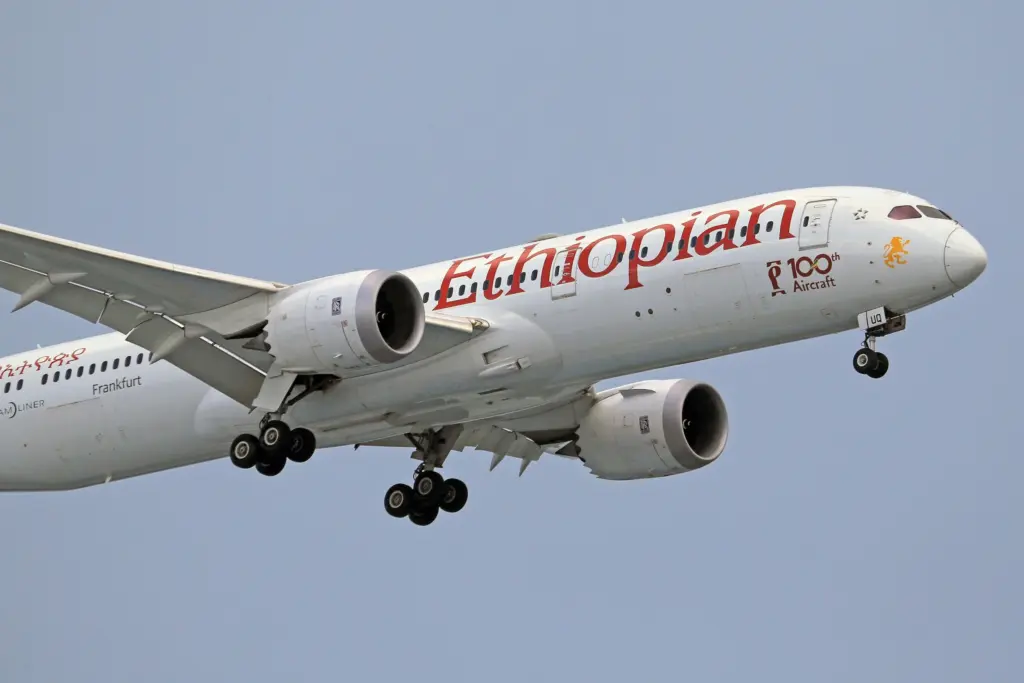
After years of instability, Ethiopia saw an increase of 15% in 2025. The country is not selling beaches or safaris. It is selling culture, history, religion, architecture, mountains, food, identity, and aviation access.
Lalibela, Axum, Gondar, Harar, Addis Ababa, and the Rift Valley give Ethiopia a cultural and heritage proposition few African destinations can match.
Ethiopian Airlines and Addis Ababa’s hub strategy give the country reach across Africa, Europe, the Middle East, Asia, and North America.
But fares are still too high: While London to New York can often be found around USD 450. You would be lucky to find London to Addis, at a comparable distance, at less than USD 650-700.
Other rising destinations: Zambia, Namibia, and Sierra Leone
Southern Africa beyond South Africa is rising too.
Zambia and Namibia are rising strongly. Zambia reached 2.2 million international tourist arrivals in 2024, up 35.3% from 2023. Namibia recorded about 1.26 million tourist arrivals in 2024, up 45.5%.
Those are 2024 numbers, not 2025, but the rebound is clear.
Sierra Leone deserves an honorable mention. It is still small, but it represents a new layer of African tourism: destinations that were long overlooked, underconnected, or held back by reputation, but are now starting to appear in the growth data.
The cost of flying is holding Africa back
Aviation remains a major obstacle.
Flying to African destinations is still far too expensive. Flying between them can be even worse. That hurts tourism, but it also hurts trade, investment, and ordinary business travel.
London to New York is about 5,550 km. On competitive transatlantic routes, return economy fares can often be found as low as USD 450.
Nairobi to Lagos is shorter, at around 3,850 km. Yet a return economy ticket can easily set you back by USD 800.
A Kenyan entrepreneur travelling to Nigeria should not be punished for moving within Africa. A Nigerian investor attending a conference in Nairobi should not pay more than someone crossing the Atlantic.
This is not just a tourism problem. It is a structural brake on African growth.
Lower flight costs would boost intra-African tourism and trade. They would also expand the aviation market itself.
More affordable fares mean more passengers. More passengers mean stronger route economics, better schedules, and more direct flights.
A larger African aviation market would attract regional carriers, international airlines, hotel investors, and the rest of the ecosystem.
SAATM is the right idea. Now it needs to work.
The Single African Air Transport Market (SAATM), was created to fix Africa’s aviation problem: liberalise air transport, open regional routes to competition, improve connectivity, and support tourism, trade, and investment.
Launched in 2018, SAATM is still progressing too slowly. Airlines point to lack of reciprocity, regulatory barriers, and weak political will.
The real obstacle is political.
Governments talk about open skies, then protect national champions, weak state-owned airlines, or airlines owned by politically connected people.
SAATM supposedly introduces the first five freedoms of the air. Properly implemented, that would already be a great first step. But Africa should already prepare to go further: the full nine freedoms.
That would allow, for example, Kenya Airways to operate Johannesburg-Windhoek without starting or ending in Nairobi. European airlines have operated under similar open-market rules for more than three decades.
Europe introduced open skies in 1993. Since then, its aviation market has near-quadrupled, while average fares have fallen by nearly half. Competition created demand. Demand made more routes viable. More routes made the market bigger.
The idea was controversial then. Today, nobody seriously wants to go back.
SAATM countries should obviously start by fully implementing the first phase of the initiative, but also set up the next phase. The benefits go far beyond tourism. Lower fares and better connections affect trade, investment, and regional business across the continent.
Visa policies that kill demand
Restrictive visa policies are self-inflicted damage.
The moment travellers need advance permission, the decision changes. It is no longer “book the ticket and go.” It becomes: check the rules, find the portal, upload documents, pay the fee, wait for approval, then confirm the trip.
That kills quick decisions. Travel decisions often favour the easiest destination. Every extra step loses demand before it becomes bookings.
The visa-fee argument is weak. A USD 30 or USD 50 fee is peanuts compared with the visitor spending lost when people choose another destination. Hotels, restaurants, transport, parks, guides, shops, events, and local services lose far more than the state collects.
The security argument is not much better. Modern borders can scan passports against national and international databases on arrival. That is the core security check. A pre-travel visa often just moves the same check into an office, where someone reviews the result and clicks approve or decline.
Visa on arrival is less damaging, but only if it is fast. Kenya’s old visa-on-arrival system was poorly organised, with queues that could take hours. Then came the e-visa, which added pre-travel friction. The eTA is simpler, but still an advance-approval requirement for a meagre fee.
Kenya has since waived these requirements for citizens of most African countries. That supports tourism, business travel, regional integration, and intra-African movement.
For serious tourism growth, simpler is better: open entry for all or most nationalities, e-gates, passport scanners on arrival, real-time database checks, and border police available when intervention is actually needed.
Keep the security. Remove the friction.
Ease of movement
Africa’s next growth phase depends on movement. For tourism, but also for trade and regional integration.
Expensive flights. Restrictive visas. Too few direct connections. Local airlines protected for political reasons.
That is holding back growth that could transform the continent.
Make African destinations cheaper and easier to reach, and the growth can spread beyond today’s strongest markets.
Lower fares. Easier entry. Better routes. More competition. Stronger regional circuits. More direct links to the world.
That is how Africa turns tourism growth into continental economic growth.
The boom is real. Now African countries need to make it easier for people to come, move, spend, invest, and return.